
Calgary to Banff in Winter: What to Expect on Highway 1
Most winter trips from Calgary to Banff are uneventful. The road is wide, it gets plowed early, and a lot of people do it in a regular sedan without a hitch. But “most” is carrying a lot of weight in that sentence, and the days that go wrong tend to go wrong fast. Here is what the drive actually looks like between November and March, and how to decide whether you want to be the one holding the wheel.
What the drive looks like
You leave Calgary on Highway 1 heading west and the road climbs gently out of the city, past Cochrane and the Stoney Nakoda lands, then into the Bow Valley. In dry conditions it is a bit over an hour and a half door to door, and that is the baseline to remember. Add snow, add traffic on a ski Saturday, and two hours is a realistic expectation.
Where it gets tricky
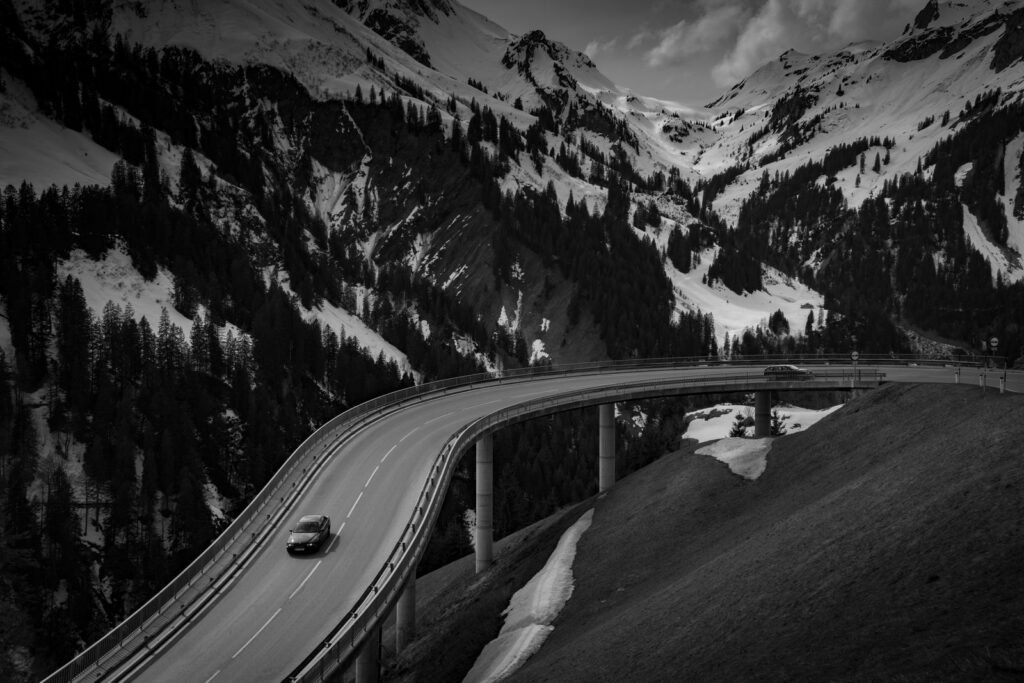
The foothills section just west of the city is open and exposed. Wind pushes snow across the road there, and a clear stretch can turn white in a few minutes. Calgary also gets chinooks, those warm winds that melt everything by afternoon. The melt refreezes at night, which is how you end up with black ice on a road that looked fine at lunchtime.
Once you are in the Bow Valley the highway is better protected, but the temperature drops and shaded corners stay icy long after the sun is up. Around Canmore and Banff you also have to think about wildlife. Elk and bighorn sheep like the road margins in winter, and they do not look both ways. The highway has fencing and wildlife crossings in much of the valley, which helps, but it is not a guarantee.
Checking conditions before you go
Do not trust the weather on your phone alone. Alberta 511 shows live road conditions, closures and camera feeds, and it is worth a look the evening before and again as you leave. Parks Canada also posts alerts for the national parks. If the highway is flagged as snow covered or partly snow covered, that is your cue to leave extra time or move the trip.
Tires, gear and the boring stuff
Winter tires make a bigger difference than the badge on the vehicle. Look for the mountain and snowflake symbol on the sidewall rather than just “all-season.” Keep the washer fluid topped up, carry a blanket and some water, and do not start a mountain drive with a quarter tank. If you carry on past Lake Louise into British Columbia, that province has its own winter-tire rules for mountain highways, so check them if you are renting.
It is also worth being honest about the rental itself. Rental cars are often fitted with all-season tires, and a vehicle you have never driven is not what you want to learn on a slippery downhill.
Driving yourself or hiring a chauffeur
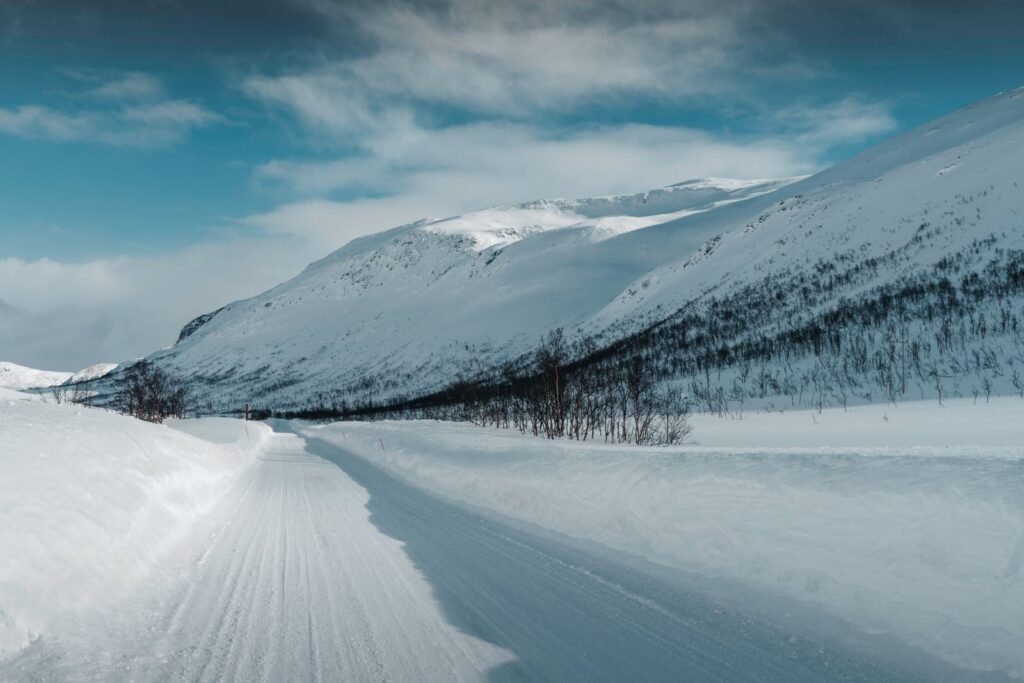
If you are comfortable in winter driving and you have the right tires, driving yourself is perfectly sensible. The case for a chauffeur is less about the road itself and more about what else is going on: you have just landed after a long flight, you are tired, the plan is a late dinner, or you want to look out the window instead of at taillights. A professional driver who does this run all winter has a feel for the road that a visitor does not, and they decide whether to slow down, wait out a squall or take a different approach.
That is the thinking behind our Calgary Airport to Banff transfer and the wider Banff limo service. If you are weighing it up against a shuttle or rental car, our comparison of shuttle, rental and private car goes through the trade-offs, and the 7-day winter itinerary shows what a cold-weather trip can look like when the logistics are handled.
If the weather turns
Closures and delays do happen. The sensible approach is to be flexible: a later departure, an extra night, or a switch of day. If you have booked with us and conditions look poor, get in touch and we will talk through the options rather than pretend the road is fine.
A realistic timeline for a winter trip
People often quote the summer drive time and then get caught out in January. On a clear, dry day the run from Calgary to Banff is comfortable and fairly quick. In snow, or in the hours after a storm, it is a different journey. Traffic slows to the speed of the most cautious driver, and one stalled vehicle can back things up for a long way. The sensible approach is to treat the summer number as a floor and add generous time on top of it.
Here is a way to think about it. Start with the normal drive time. Add time for the weather you expect, not the weather you hope for. Add a little more for the stretch of road after Canmore, where conditions can shift as the valley narrows. Then add a cushion for a stop, because almost everyone wants a coffee or a bathroom break before they reach town. If you have a dinner reservation, a ferry-style hard deadline or a flight the next morning, work backward from that time instead of forward from when you would like to leave.
None of this is meant to put you off. Most winter days on the highway are perfectly fine. The point is that the people who have a bad time are nearly always the ones who left with no margin.
What changes between the city and the mountains
Calgary weather and mountain weather are two different things. It can be cold and dull in the city, then sunny and bright by the time you reach the foothills, or the other way around. Wind is a common factor on this side of the Rockies, and blowing snow can reduce visibility even when the road itself is bare. Temperatures drop with elevation and with the time of day, so a surface that looked wet and harmless at noon can be icy by late afternoon.
It also helps to know that the road surface is not uniform. Shaded sections, bridges and the stretches near rivers tend to hold ice longer than open sections in the sun. A careful driver adjusts to the worst part of the road, not the average part, and keeps a longer gap to the vehicle ahead than they would in summer.
Wildlife on the road
Winter does not mean the animals disappear. Elk and deer often move near the road corridor, and dusk and dawn are the riskiest times. A big animal on a dark, snowy road is a real hazard. Slowing down, using high beams where it is safe and staying alert in the wooded sections are the habits that matter. If you see wildlife by the road, it is best to keep moving past it rather than stopping, both for your safety and theirs.
Daylight matters more than you think
In the middle of winter the days are short. If you leave Calgary late morning, spend a few hours in town and drive back after dinner, a good part of your return will be in the dark, and possibly in snow. Many visitors do not plan for this. They picture the trip as a day out, and the drive home as an afterthought.
If you want to see the mountains in good light, think about starting earlier and finishing earlier. A morning departure gives you time in town while it is bright, and an early start for home keeps you off the road at the coldest, darkest hours. If you do not mind the dark, that is fine too, but plan for it: make sure you have fuel, a charged phone and a clear head.
Packing the car for a winter day trip
You do not need to pack like an expedition for a day trip on a major highway, but a few things are worth having within reach. Warm layers and a hat, even if you plan to stay in the car. A pair of boots with a real grip, because parking lots and sidewalks in town can be slick. Water and a snack. A phone charger. A small scraper and a brush if you are driving your own vehicle. If you are travelling with children, extra clothing and something to keep them busy.
If you are being driven, you can leave most of this to the chauffeur, but dressing for the walk from the car to wherever you are going is still your job. Many people only think about the drive and forget that they will be standing outside for photos, at a viewpoint or in a queue.
Timing your departure around the forecast
The best tool you have is flexibility. Look at the forecast the night before and again in the morning. If a storm is forecast for the afternoon, consider leaving earlier, or shifting the trip to another day. Weather in the mountains can change faster than the forecast, so having a fallback plan helps. Some travellers book a driver with the understanding that the schedule may move by a few hours if conditions require it. That is a perfectly reasonable arrangement, and it is one of the reasons to talk to the driver in advance about timing.
If you are planning a longer stay, our guide to a Banff day trip by private car covers a sample day, and the Banff limo service page explains how transfers work.
What to do if you get stuck
Even with good planning, delays happen. If traffic stops, stay calm and keep your distance from the vehicle ahead. Keep the heat on if you can, and make sure your phone has charge. If you are in your own car and the wait is long, it helps to have water and something warm to wear. If you are with a driver, they will keep you informed and will usually know the quickest way to adjust the plan.
It is also worth telling someone at the other end where you are and when you expect to arrive. A quick message to the hotel, the restaurant or your family means they will not worry if you are late, and it takes the pressure off the drive.
Is it worth going on a bad-weather day?
Sometimes the best choice is to move the trip. If conditions are poor and you have flexibility, a different day will almost always be a nicer experience than a stressful drive in a storm. If you cannot move the trip, leave early, drive slowly and accept that you may arrive later than planned. The mountains are beautiful in all kinds of weather, and a snowy day can look spectacular, but only if you are comfortable and safe.
Quick answers
How long does it take to drive from Calgary to Banff in winter?
In good conditions it is a bit over an hour and a half. With snow or heavy weekend traffic, plan on about two hours and check Alberta 511 before you leave.
Do I need winter tires between Calgary and Banff?
Alberta does not require them on this stretch, but they are strongly recommended. If your route continues into British Columbia, that province has its own rules for mountain highways.
Is Highway 1 ever closed?
Yes, sometimes for collisions or heavy snow. Alberta 511 lists current closures, so check it before departing.