
Larch Season in the Rockies: Private Day Trips from Calgary
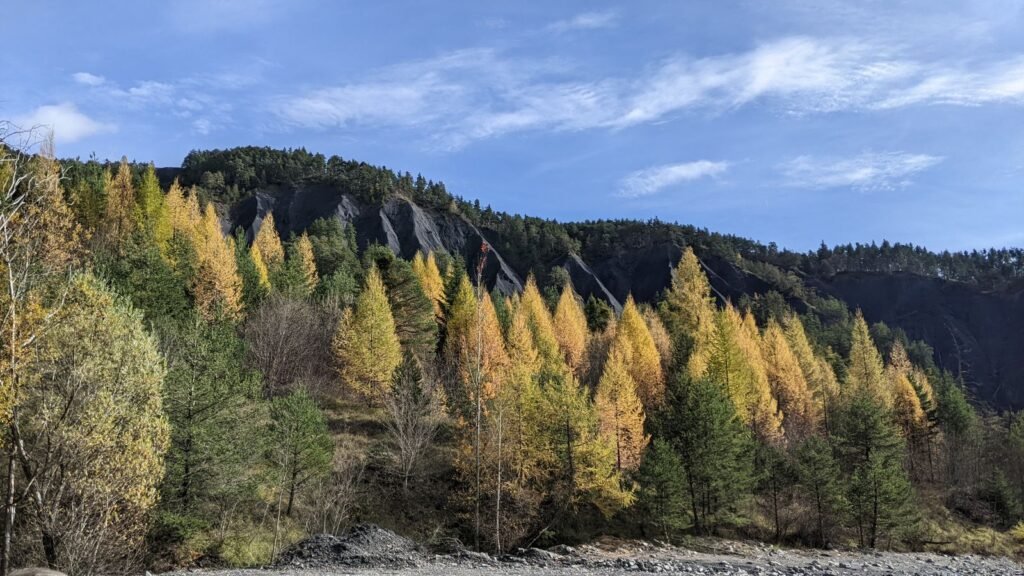
Most conifers stay green all year. Subalpine larch does not. For a short stretch each autumn its needles turn gold before dropping, and high mountain slopes in the Rockies glow like someone left a lamp on. It is one of the best-kept secrets of the Canadian fall, and it rewards people who plan ahead because the window is narrow.

When to go
The colour usually peaks in the second half of September and into early October, but it shifts from year to year with the weather. A warm, dry late summer, an early frost or a snowfall can all move the timing by a week or more. The golden phase also lasts only a couple of weeks. That is why we say plan for the season, then confirm the week with current trail reports from Parks Canada and local guides, rather than locking in a date months ahead with no flexibility.
If you are reading this in late autumn, the 2026 season has passed. Treat this as your plan for next September.
Where people go to see it
- Moraine Lake area: the Larch Valley trail is the best-known larch hike in the Rockies. Access to the Moraine Lake road and the trail has been subject to rules and restrictions in recent years, including how you reach the lake, so confirm the current arrangements with Parks Canada first.
- Kananaskis: some trails there also have larches, and they are often a bit quieter. Ask us or local trail resources what is best that week.
- Elsewhere in the Rockies: several higher-elevation hikes carry larch stands, and each has its own access and trail conditions.
Why a driver helps in September
September is peak season in the national parks. Parking lots at popular trailheads fill early, roads are busy, and you may be out well before dawn to get a spot. A chauffeur turns that into an early pickup and a drop-off at the right trailhead, with the car waiting afterwards. You also avoid the late-day drive home on tired legs.
It is not a magic fix. Some access rules apply to everyone, including us, so we check what is currently allowed before planning the day. We would rather tell you honestly that a particular plan will not work than let you find out at the car park.
What to bring
- Layers. A warm morning at the trailhead can feel like winter near the top.
- Sturdy shoes. Many larch hikes are uphill and rocky.
- Food and water. You will not find a cafe up there.
- Bear spray if you know how to use it, and an awareness of the current wildlife guidance in the area. Parks Canada sometimes sets group-size rules on certain trails in grizzly country.
- A camera, naturally.
Making it a proper day
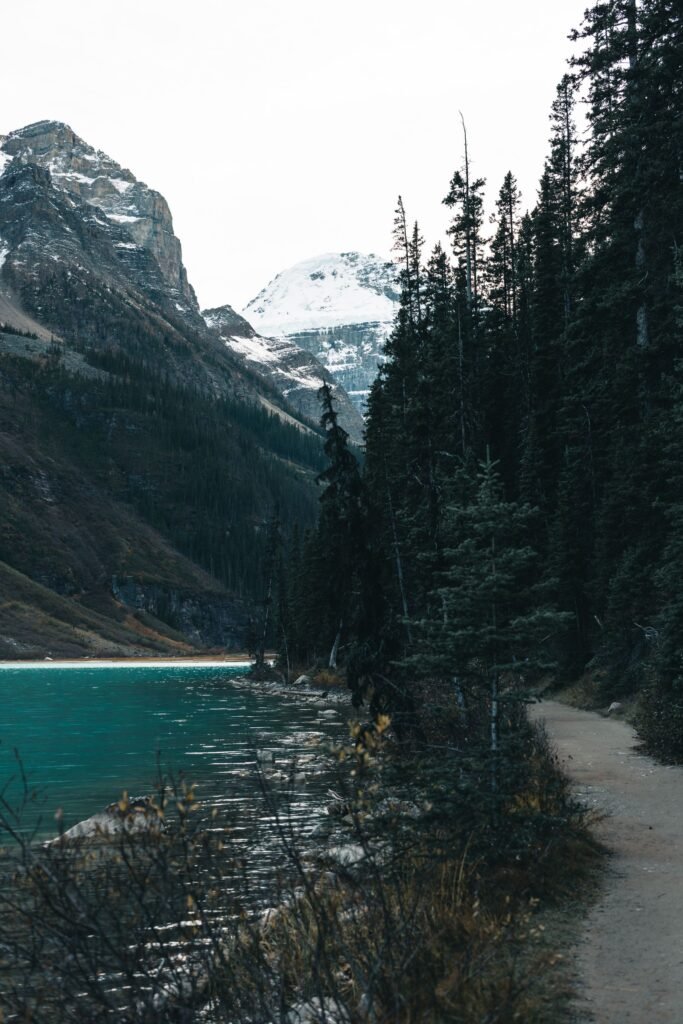
Many people pair a larch hike with an easier stop, such as Lake Louise or Banff, so non-hikers in the group have something to do. If you plan to stay overnight, we can arrange transfers from Calgary Airport to Lake Louise, and our Moraine Lake transfer page explains what we know about access. The Banff limo service covers the wider region.
When you know the dates you are travelling, message us and we will check what is possible for those days.
Reading the colour
Larch season can be easy to mistime. Larches are conifers that turn gold in autumn and then drop their needles. The timing varies from year to year and from place to place, depending on elevation, weather and the weeks leading up to it. Higher areas turn first, and lower ones follow. Because of this, there is no single date that works every year, and it pays to check recent reports from the park or from other visitors in the days before you go.
The colour usually lasts for a short period. Wind and early snow can shorten it, and a sunny, calm week can stretch it out. If your dates are flexible, you can improve your chances by choosing a day when the weather looks good and the reports are positive. If your dates are fixed, enjoy whatever you find, because the surrounding scenery is lovely at that time of year even if the larches are not at their peak.
What kind of visitor are you?
Larch trips attract different people. Hikers want the trail and the view from the top. Photographers want the light. Families want a pleasant day out with a short walk. Couples want a quiet escape. Each of these needs a different plan. If you are a hiker, you will want to start early and carry the right gear. If you are a photographer, you may want to be in position at sunrise or sunset. If you are with children, you may prefer an easier path or simply a drive with several stops.
Tell your driver what kind of day you want. If you have your heart set on a particular hike, check the official sources for current access, parking and any restrictions, because arrangements can change from season to season. Moraine Lake in particular has its own access arrangements, so confirm the current rules before you plan around it.
Getting an early start
September is a popular month, and the most famous places can be crowded. An early start helps with parking, with the light and with the experience of the trail. It does mean an early pickup, perhaps well before sunrise. Many people find the extra effort worthwhile. The mountains in the early morning have a stillness that is hard to find later in the day. And with a driver, you can rest on the way, instead of tiring yourself out before the hike.
Weather in September
September in the mountains can bring warm days, cold nights and the first snow. The weather can change within hours. Check the forecast, bring layers and be ready for anything. A clear, crisp day is wonderful for larches, but a light dusting of snow can look beautiful too. What you want to avoid is heavy rain or strong wind on an exposed ridge, so use your judgement. If the forecast looks bad, consider changing the day or choosing a lower, easier walk.
Respecting the landscape
The popularity of larch season puts pressure on the trails and the surrounding area. Stay on marked paths, pack out what you bring, keep a safe distance from wildlife and follow park guidance. Be patient with other visitors and with the limits on parking. These small acts of care protect the places we all come to enjoy.
Beyond the larches
If you reach your destination and find the colour has not yet turned, or has already gone, do not be disappointed. The mountains in early autumn offer a lot besides larches: clear air, bright light, fewer insects and quieter trails than in high summer. Lake Louise, Banff and Emerald Lake all reward a visit at this time of year. Our guides to the Calgary Airport to Lake Louise page and the Emerald Lake tour give more ideas.
Why a driver helps in autumn
Autumn is a busy time for photographers and hikers, and mountain roads can be crowded. Parking at popular trailheads often fills early. A driver can drop you at the start, pick you up at the end and handle the route home. You can rest after a long hike without having to concentrate on the road. And because daylight is shorter than in summer, having someone else drive means you can use every hour of it.
Planning a larch day with us
Send us your preferred date, the number of people, the hike or viewpoint you have in mind and the time you would like to start. We will reply with a suggestion and a fixed quote. If your plans depend on conditions, tell us, and we will explain how that works. Contact us through the contact page, or look at the Rocky Mountain private transfers page for more.
A longer view
Larch season is brief, and that is part of its appeal. It comes once a year, and it asks you to be there at the right moment. Even if you miss the very peak, the experience of being in the mountains in autumn is worth the trip. Go with realistic expectations, a flexible mind and a good plan, and you will come home with more than photographs.
Example day: a gentle larch drive
Not everyone wants a long hike. Here is how a gentler day might go. Leave Calgary in the morning and drive west, with a coffee stop on the way. Arrive in the Lake Louise area before the busiest part of the day, take a walk by the water and look at the hillsides for gold. Have lunch, perhaps in town or from a picnic. In the afternoon, stop at one or two viewpoints on the way back, and take your time with photographs. You will be home by evening, with a camera full of images and legs that are only slightly tired.
Example day: a hiker’s early start
For a more active day, the plan changes. Depart before dawn, reach the trailhead as the light comes up, and hike for several hours. Pack plenty of water and food, check the trail conditions before you go and carry a warm layer. Be back at the vehicle by early afternoon, and rest on the way home. Because the day starts early, it is common for passengers to sleep in the vehicle, which is one of the quiet benefits of having a driver.
Keeping the group together
Groups have different energy levels. Some want to walk further, and some want to sit with a coffee. Agree on a plan in advance, including a meeting time and place. Let the driver know the schedule, so they can be ready when you are. If the group splits for part of the day, make sure everyone has a phone with enough charge and a number to call.
What to remember
Larch season is about timing, preparation and patience. Check conditions, start early, dress for the weather, respect the trail and the wildlife, and let someone else do the driving. If you do those things, you will give yourself the best chance of a memorable day, whatever the larches decide to do.
If you only have a weekend
Plenty of people can only get away on a Saturday or Sunday, and in September those are the busiest days of the whole season. If that is you, plan around the crowds. Start very early, pick a less famous viewpoint as a backup, and be ready to change your plan if a car park is full. A weekday visit, if you can manage one, is almost always calmer. Whichever day you choose, the same rules apply: check the conditions, dress for the weather, and give yourself more time than you think you need.
It also helps to agree with your group, before you leave, what a good day looks like. For some it is the summit and the view. For others it is the walk, the picnic and the company. A shared idea of success makes decisions easier on the trail, and it keeps a small disappointment, such as a closed car park, from spoiling the day.
Quick answers
When do the larches turn gold in the Rockies?
Usually from mid-to-late September into early October, though timing changes year to year. Check recent trail reports before you set a date.
Can I drive to Moraine Lake for a larch hike?
Access rules for the Moraine Lake road have changed in recent years. Check Parks Canada for the current arrangement, or ask us what we can do for your date.
How long does larch colour last?
Only a couple of weeks at any given elevation, so a flexible schedule helps.